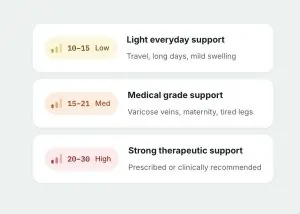
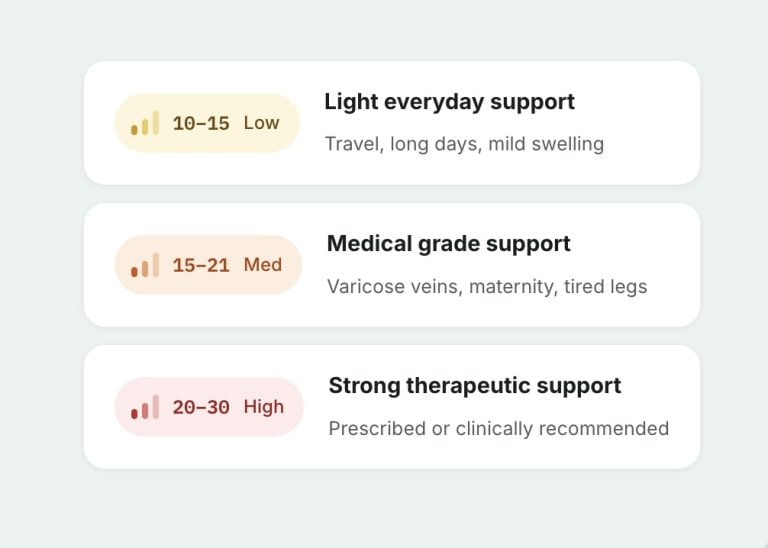
mmHg (millimetres of mercury) measures the level of compression — in simple terms, how firmly the sock squeezes the leg.
The higher the number, the firmer the compression.
The light compression levels
These are the everyday levels. The higher the number, the more pressure the socks put on your legs.
8–15 mmHg — very light compression
- Good for everyday wear
- Tired, achy or slightly swollen legs
- Sitting or standing for long periods
- Travel and general leg comfort
10–15 mmHg — light compression
- Similar uses to 8–15 mmHg, but slightly more supportive
- Mild aching, tiredness or swelling
- Long periods sitting or standing
- Often used for general everyday support
12–15 mmHg — light compression
- A little firmer again
- Mild swelling or aching
- Travel, work, standing for long periods
- General circulation support
In simple terms: all three are light compression.
15–20 mmHg — mild to moderate compression
Best for:
- Everyday wear
- Travel (flying or long car journeys)
- Standing or sitting all day
- Minor ankle swelling
- Mild varicose veins
- Tired, heavy legs
- Preventative use
Why choose it? This level gently supports circulation and helps prevent blood pooling in the lower legs. It feels supportive but comfortable for first-time wearers.
Think of it as: preventative support and daily leg care.
20–30 mmHg — firm, medical-grade compression
Best for:
- Moderate varicose veins
- Post-surgery recovery
- After a diagnosed DVT (as advised by a clinician)
- Pregnancy-related swelling
- Moderate oedema
- Higher-risk individuals
Why choose it? This level applies significantly firmer pressure, helping push blood and fluid back toward the heart more effectively. It is designed for managing medical conditions, not just comfort.
Prescription? Often recommended by a GP or healthcare professional, particularly after surgery or a clot.
Think of it as: medical support for established venous problems.
The simple rule
- 15–20 mmHg — prevention and everyday support
- 20–30 mmHg — treatment and stronger medical management
Important note
Stronger is not always better.
Wearing 20–30 mmHg without needing it can feel uncomfortably tight and may not be appropriate for some medical conditions, such as certain arterial problems. Proper measuring — ankle, calf and length — is essential at all levels.
All of the above is a general guide only. Always consult your doctor or physician before purchasing compression products.
Not sure which level you need? Call our fitting team on 01353 624624 — it takes two minutes and saves a return.
Not sure which compression level you need?
Our fitting team have been sizing compression hosiery for 25 years. No obligation, no pressure — just an honest answer.